Raptor Project
Helping the Raptors of North Wiltshire
On Thursday the 27th of November 2025 we officially launched our new Raptor Project. The aim is to improve the chances of 4 raptors to breed successfully in our area. Those birds are Tawny owls, Barn owls, Little owls and Kestrels.
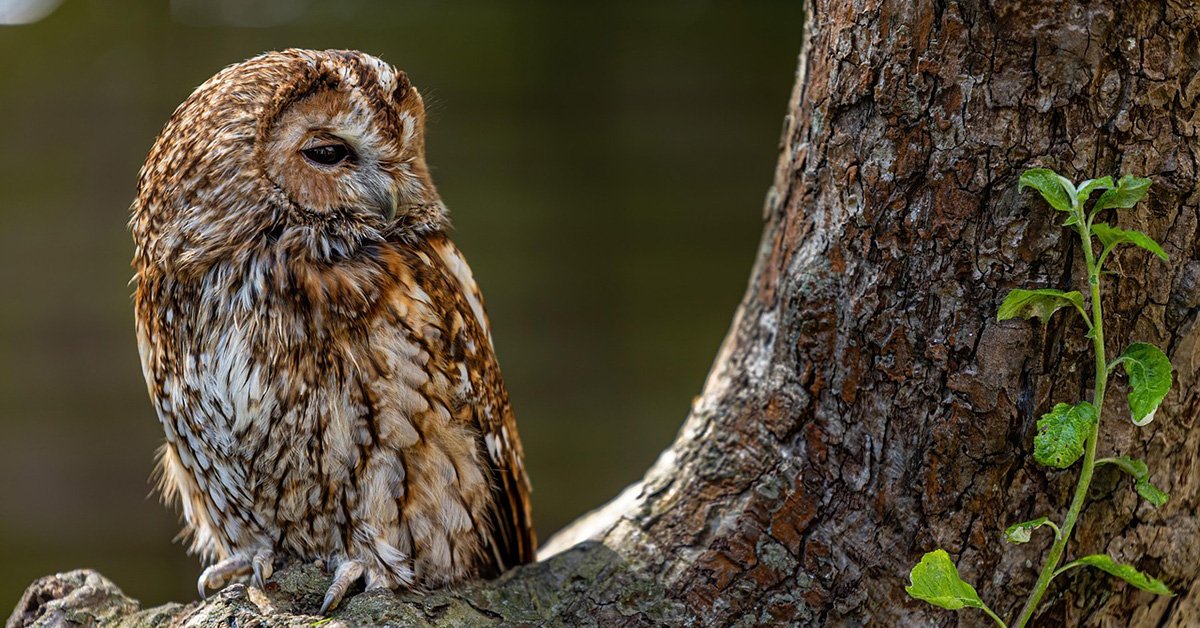
Tawny Owl – Strix aluco
On a cold and dark autumn or winter night it is the Tawny owl that you are most likely to hear calling with the familiar ‘keewik’and ‘huhuhuhoo’. This call that you hear is, in fact, likely to be a female ‘keewik’ contact call and the male territorial call of ‘huhuhuhoo’.

Listen to Tawny owl calls HERE
Tawny owls preferred habitat is broad-leaved and mixed woodland but they can also be found living in urban parks, large gardens and graveyards.
If you are lucky enough to see one, they are very well camouflaged in their mottled reddish-brown feathers and paler underside. Their heads are round with large dark eyes which cannot move in their sockets, hence the need to be able to rotate their heads by as much as 270 degrees!
It is estimated that there are around 50,000 breeding pairs of these nocturnal hunters in Britain. The food they hunt for is varied. Mice and voles are their favourite prey but they will also take small birds, amphibians, large insects, earthworms and even bats. The meal is swallowed whole and the inedible parts are regurgitated as an owl pellet.
Tawny owls pair up in October / November time when young owls are setting up new territories. They then remain paired for life. These established pairs remain on their territory throughout the year and defend it vigorously.
By mid-March the first eggs are being laid. There is a short gap between laying each egg which allows for a greater likelihood of some of the chicks surviving.
Despite being the most common owl in the UK, the Tawny owl is still classified on the Amber list for birds of conservation concern as their numbers are thought to have fallen dramatically in recent years.
We would like to increase the numbers of Tawny owls in Malmesbury and the surrounding area. We are getting 4 new Tawny owl boxes made and will be looking for the most suitable locations for them as part of our Raptor Project.
Barn owl – Tyto alba
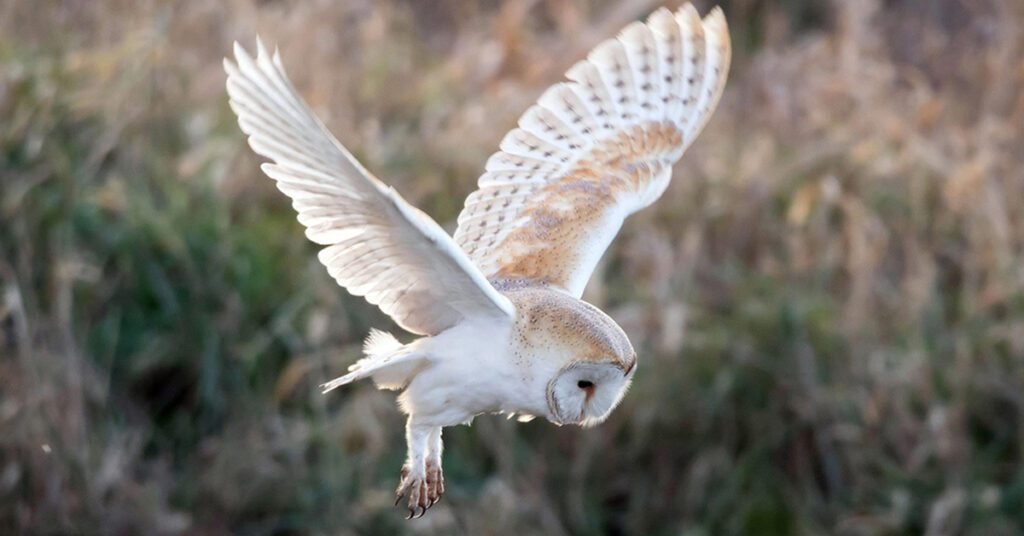
With their heart-shaped face and pure white under parts, Barn owls are instantly recognisable. They are easiest to spot in the autumn and winter when they are regularly seen hunting during the day. They also frequently, perch on fence posts where they easily stand out!

At a distance, the overall impression on seeing this bird is that it is white. But this is really only the underside of the bird. The back and top of the wings are a mottled buff and grey colour. The legs are noticeably long which they stretch out to pluck their prey from the ground. If you hear a Barn owl it is a shrill, screeching sound so it is not surprising that the old name for them is the Screech owl. You are most likely to hear a Barn owl in the spring when they call to attract a mate. Listen to a Barn owl HERE.
Mice, voles and shrews are most commonly eaten but, as recently owl pellet dissection carried out by Malmesbury and District Natural History Society in association with the Wiltshire Mammal Group, frogs and even bats will be taken on occasion.
Barn owls weigh between 250 and 350g and their wingspan is approximately 80 to 95cm.
Barn owls generally mate for life. They are highly faithful to their partner and often return to the same nesting site each year. Pairs tend to share, and defend, the same territory but may not always roost together outside of the breeding season.
Barn owl courtship starts in early February or March. The exact time will depend on the availability of food. The male will bring food to the female and the pair will often engage in mutual preening and‘bill fencing’!
Typically four to seven eggs are laid in April or May at two-to-three-day intervals. Incubation begins as soon as the first egg is laid which means that the chicks will hatch at different times and be of different sizes. This is known as asynchronous laying. This evolutionary strategy helps to maximize reproductive success particularly where prey availability might be unpredictable. In a year where prey is in short supply, they older siblings will predate the younger and weaker chicks in a process known as ‘facultative siblicide.’
Barn owls prefer habitats that combine suitable nesting sites with plentiful hunting grounds, such as open countryside and mixed farmland with rough grasslands. As their name suggests, they often roost in old barns or other farm buildings, But they will also use hollow trees and other cavities.
These birds suffered a decline during the twentieth century which is suspected to be related to the use of organochloride pesticides. However, it is believed that their numbers have begun to increase between 1995 and 2008. The Malmesbury Natural History Society would like to support their return to their pre-pesticide numbers by installing new nest boxes in our local area as part of our Raptor Project.
Little Owl – Athene noctua
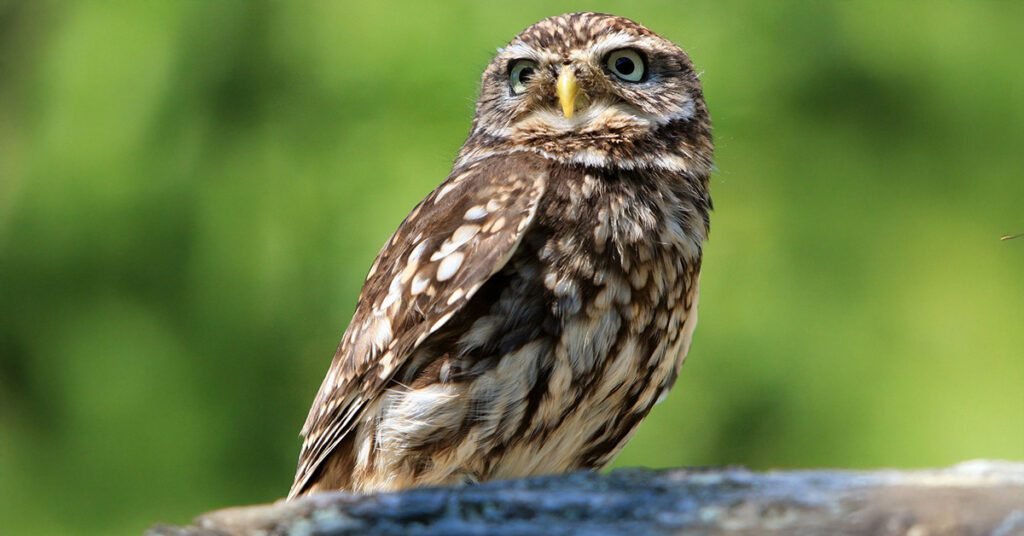
Little owls are small stocky birds which grow to around 21 to 23cm. They have grey-brown plumage, bright yellow eyes, and seemingly to humans, a permanently grumpy expression! They are primarily active at dawn and dusk but also hunt during the day, and their diet includes insects, small mammals, reptiles, and amphibians.
The UK’s little owl population is estimated to be around 5,700 breeding pairs, though this is a decline from previous decades, with a 65% drop over 25 years and an 11% contraction in their range.

Little owls were introduced to the UK in the 19th century but they very quickly settled in as a familiar sight in our countryside, partly down to their habit of often being active during the day, when people are likely to see them.
Little owls can often be seen perched in the open while hunting and even pursue their prey on the ground. When they take off they have an undulating flight which is similar to a woodpecker.
They are happy to live on farmland, grassland, allotments and gardens. Anywhere, in fact, where they can easily find their preferred diet of earthworms and invertebrates. When I kept a vegetable garden we had one visit regularly after the soil had been recently dug!
Little owls are both highly territorial and monogamous. Between April and May the female lays 2 to 5 eggs in a tree cavity or rabbit burrow. After about 4 weeks of incubation the chicks hatch and 5 to 6 weeks after that they fledge. However, the juveniles remain dependent upon the adults for several weeks after that.
A key characteristic of a Little owl is their inclination to bob their heads up and down when they are alarmed. As Britain’s smallest owl they have to be cautious especially where Buzzards and Sparrowhawks are concerned!
We would like to increase the numbers of Little owls in Malmesbury and the surrounding area. We are getting 4 new Little owl boxes made and will be looking for the most suitable locations for them as part of our Raptor Project.
Kestrel – Falco Tinnunculus
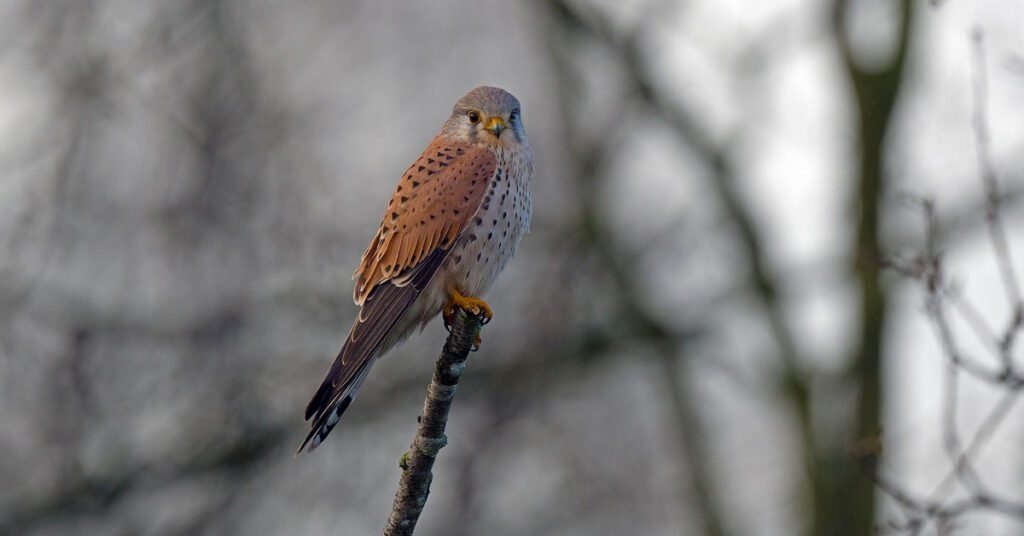
The Common Kestrel is easily spotted compared to other Raptors due to its eye-catching habit of hovering while hunting its prey. While other birds do hover such as buzzards, kites and Barn owls, it is the Kestrel that is a true expert in this activity. Kestrels can hover perfectly still by rapidly flapping their wings and adjusting their tail feathers for greater control. While they are hovering, they are scanning the ground using their ability to see ultraviolet light, this shows up the urine trails of small rodents which are their prey.

This captivating bird has appeared in a wide range of literature from the children’s book and film‘Kes’ to Gerrard Manley Hopkin’s atmospheric,‘The Windhover.’Windhover is the old name for this diminutive falcon. It is a quite literal description of this diminutive falcon while hunting.
Kestrels are light brown in colour with dark spots. Males have a grey-blue head, whereas females are all brown. Their wings are pointed and the tail looks long in flight as opposed to fan-shaped when the bird is hovering.
Kestrels weigh up 250g and their wingspan is approximately 75cm. For comparison they are similar in size to a magpie.
Kestrels are largely solitary defending a territory year-round. They usually pair for life but do not spend their time together outside of the breeding season. The pair come back together during late winter to early spring to begin the courting process. The male
selects a potential nesting site, such as a hole in a tree, and shows it to the female which makes the final choice.
Four to five eggs are laid in late April to early May with each egg being laid every two days. The female does most of the incubation work while the male provides food for them both but the male does some incubation duties providing a ‘break’ for the female. Incubation takes about a month and the young fledge another month after that. The adults continue to take care of the fledgelings for another two to three weeks.
The Kestrel’s ideal habitat is open grassland and farmland. Kestrels can also be found in open spaces in towns and cities providing they can easily find their preferred prey. This is largely field voles but they will also take mice, shrews, small birds, worms and also insects.
Sadly, the British population of Kestrels has declined by 37% between 1995 and 2023 resulting in their current classification of Amber – a bird of conservation concern.
We would like to increase the numbers of Kestrels in Malmesbury and the surrounding area. We are getting 3 new Kestrel boxes made and will be looking for the most suitable locations for them as part of our Raptor Project.
We now have 4 Barn owl boxes, 4 Tawny owl boxes, 4 Little owl boxes and 3 Kestrel boxes – a HUGE thank you to everyone who helped to make these nest boxes. Due to the help we have had making these boxes we have been able to keep the cost of buying a box down to a comparatively low price. Barn owl and Tawny owl boxes are £55 each compared to £150 to £200 from commercial outlets. Likewise the Little owl and Kestrel boxes are £45 compared to £70 to £100+ normally.

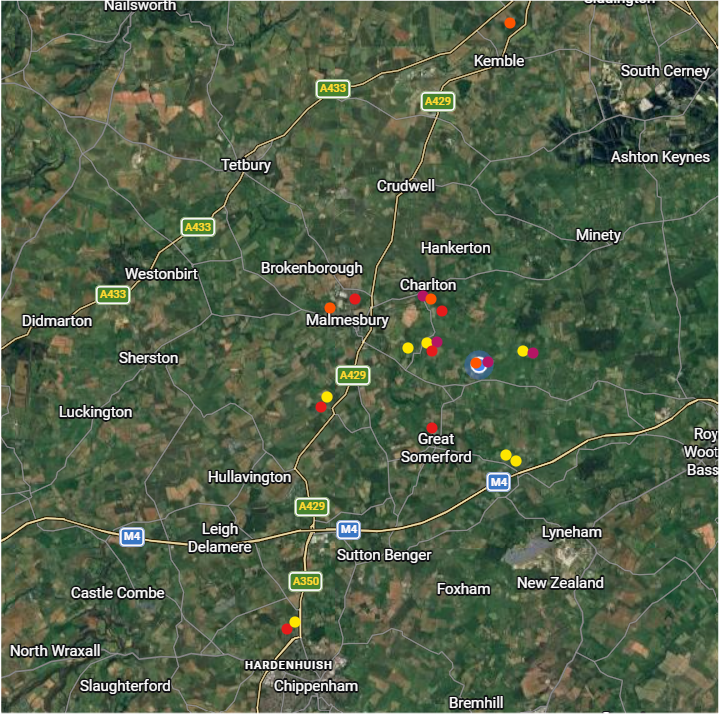
The next step is to find appropriate places to place them. We have some volunteers but are looking for more. The habitat they each need is:
Barn Owl – prefer open countryside with rough grassland. The boxes are very big so they need to be attached to large, mature trees such as Oaks.
Tawny Owl – prefer deciduous or mixed woodland but will live in large gardens or parks with mature trees. They like to have open countryside in their territory too for hunting small mammals.
Little Owl – prefer mixed landscapes containing farmland, open woodland, parkland and hedgerows. They primarily eat insects like beetles and earwigs or worms so soil that is regularly turned over is ideal for them such as an Allotment!
Kestrel – grassland, farmland, meadows and pastures are preferred especially those with long tussocky grass supporting large populations of small mammals.
The plan is for us to erect these nest boxes in the near term and monitor them for activity. The location would need to be reasonably accessible so that they can be reached in the future. If young are raised in them, we will ring them for future reference.
We would also need to return in the late autumn / winter to clear the boxes out!
If you feel you have the right habitat for one or more of the above nests and would like to buy one to host on your property please contact us to register your interest.